About GLYCERINE CP
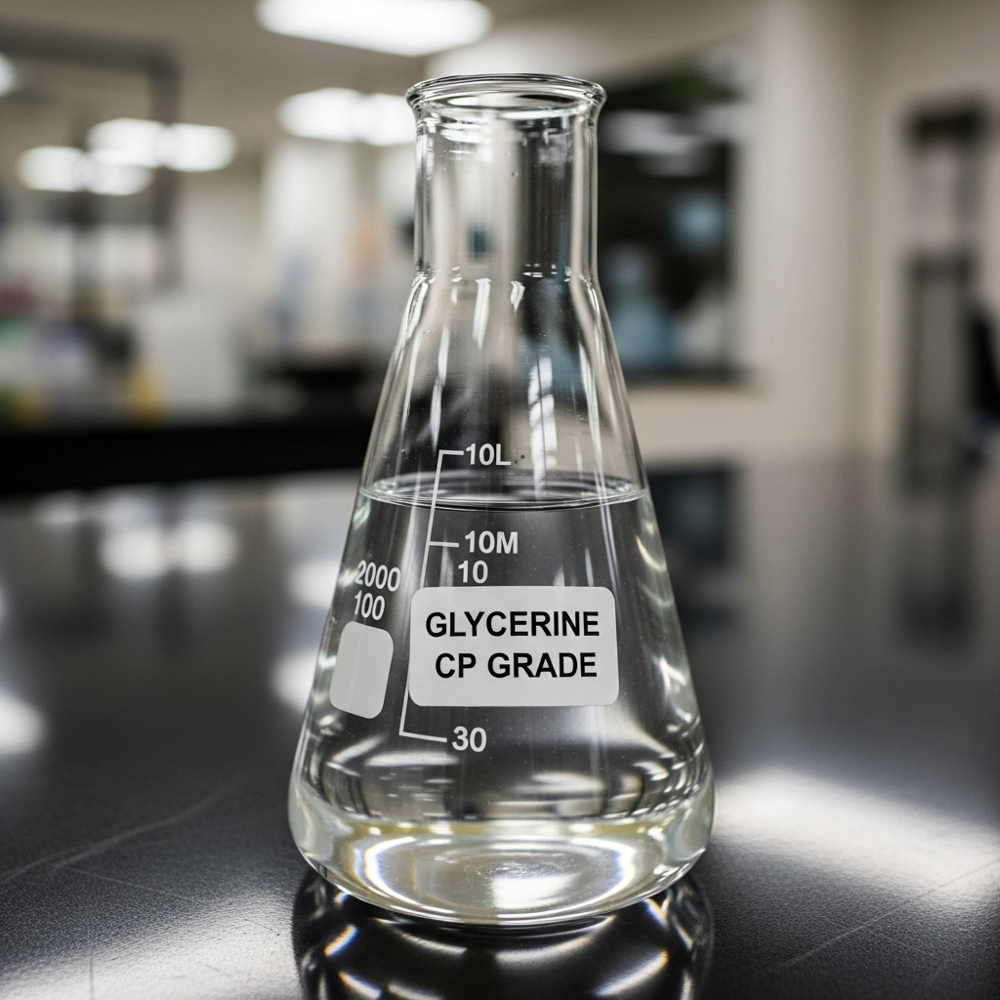
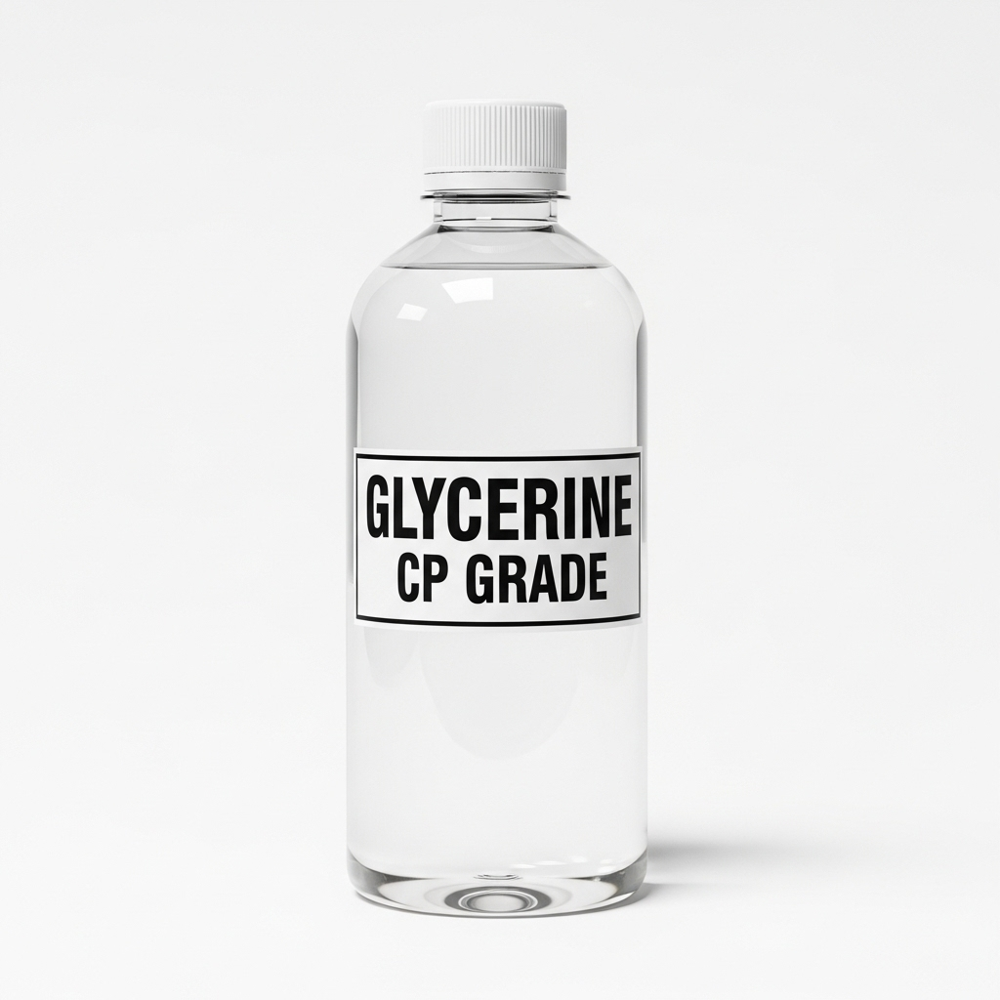
We supply high-quality Glycerine (CP Grade) a clear, colorless, and odorless viscous liquid widely used across the rubber, plastic, polymer, tyre, paint, and chemical industries. With a purity of 99.5%, our glycerine offers excellent chemical stability, moisture-retaining properties, and compatibility with various industrial materials.Trusted for its consistent quality, safe packaging, and competitive pricing, our glycerine is ideal for use as a plasticizer, lubricant, and humectant in multiple manufacturing processes. We ensure timely delivery and bulk availability for industrial buyers.
Key Features:
-
Clear, odorless, viscous liquid
-
High purity 99.5%
-
Excellent moisture retention and lubricity
-
Soluble in water and alcohol
-
Industrial-grade suitable for multiple applications
-
Long shelf life and safe packaging
-
Applications:
-
Rubber & Tyres: Used as a plasticizer and processing aid
-
Plastics & Polymers: Improves flexibility and smoothness
-
Paints & Coatings: Enhances flow and finish
-
Chemicals: Used as solvent, carrier, and humectant
-
Functions of Glycerine:
-
Plasticizer: Improves flexibility and softness in rubber and plastics
-
Humectant: Retains moisture and prevents drying in formulations
-
Lubricant: Reduces friction in processing equipment and materials
-
Solvent: Acts as a carrier for chemicals and additives
-
Stabilizer: Enhances product stability and shelf life
-
Dispersing Agent: Helps evenly distribute pigments and fillers
Applications Across IndustriesGLYCERINE CP is integral to numerous industrial processes, including the manufacture of plastics, rubber, adhesives, sealants, and paints. Its role as a plasticizer and lubricant enhances flexibility and workability, while as a humectant, it ensures moisture retention. The clear and odorless nature of this liquid makes it highly suitable for processes requiring purity and consistent quality.
Chemical Purity and Storage RecommendationsOur GLYCERINE CP boasts a 99.5% purity level, making it CHEMICALLY PURE and ideal for demanding industrial environments. To ensure maximum effectiveness throughout its two-year shelf life, store the product at room temperature in tightly-sealed containers, away from sources of contamination or extreme conditions. This careful handling preserves its composition and usefulness in manufacturing.
FAQ's of GLYCERINE CP:
Q: How is GLYCERINE CP typically used in rubber and plastic industries?
A: GLYCERINE CP is primarily added as a plasticizer and lubricant during the processing of rubbers and plastics. This enhances flexibility, simplifies molding, and improves the final product's durability and texture.
Q: What makes GLYCERINE CP advantageous in paint and coating applications?
A: As a component in paints and coatings, GLYCERINE CP improves flow, flexibility, and the final finish. Its humectant properties also help maintain moisture levels, promoting a smoother application and longer-lasting surface.
Q: When should GLYCERINE CP be introduced during polymer or tyre production?
A: It is usually integrated during the mixing or compounding stage, serving both as a lubricant and a processing aid. This helps to reduce friction and enhance the mixture's consistency before molding or curing.
Q: Where should GLYCERINE CP be stored to maintain its quality?
A: Store GLYCERINE CP at room temperature in tightly closed containers, away from direct sunlight, moisture sources, and incompatible materials. Proper storage safeguards its purity and extends its two-year shelf life.
Q: What benefits does GLYCERINE CP provide in adhesive and sealant formulations?
A: It acts as a softening and moistening agent, providing flexibility and a smoother texture for adhesives and sealants. This results in products that are easier to apply and that retain performance over time.
Q: Is GLYCERINE CP safe to handle and are there any hazards to be aware of?
A: While highly useful in industrial applications, GLYCERINE CP is classified as poisonous and should be handled with appropriate safety gear, such as gloves and goggles. Ensure proper ventilation in the working area and follow all safety guidelines to avoid direct contact or inhalation.








 Send Inquiry

 Send Inquiry


 Send Inquiry


 English
 Spanish
 French
 German
 Italian
 Chinese (Simplified)
 Japanese
 Korean
 Arabic
 Portuguese